
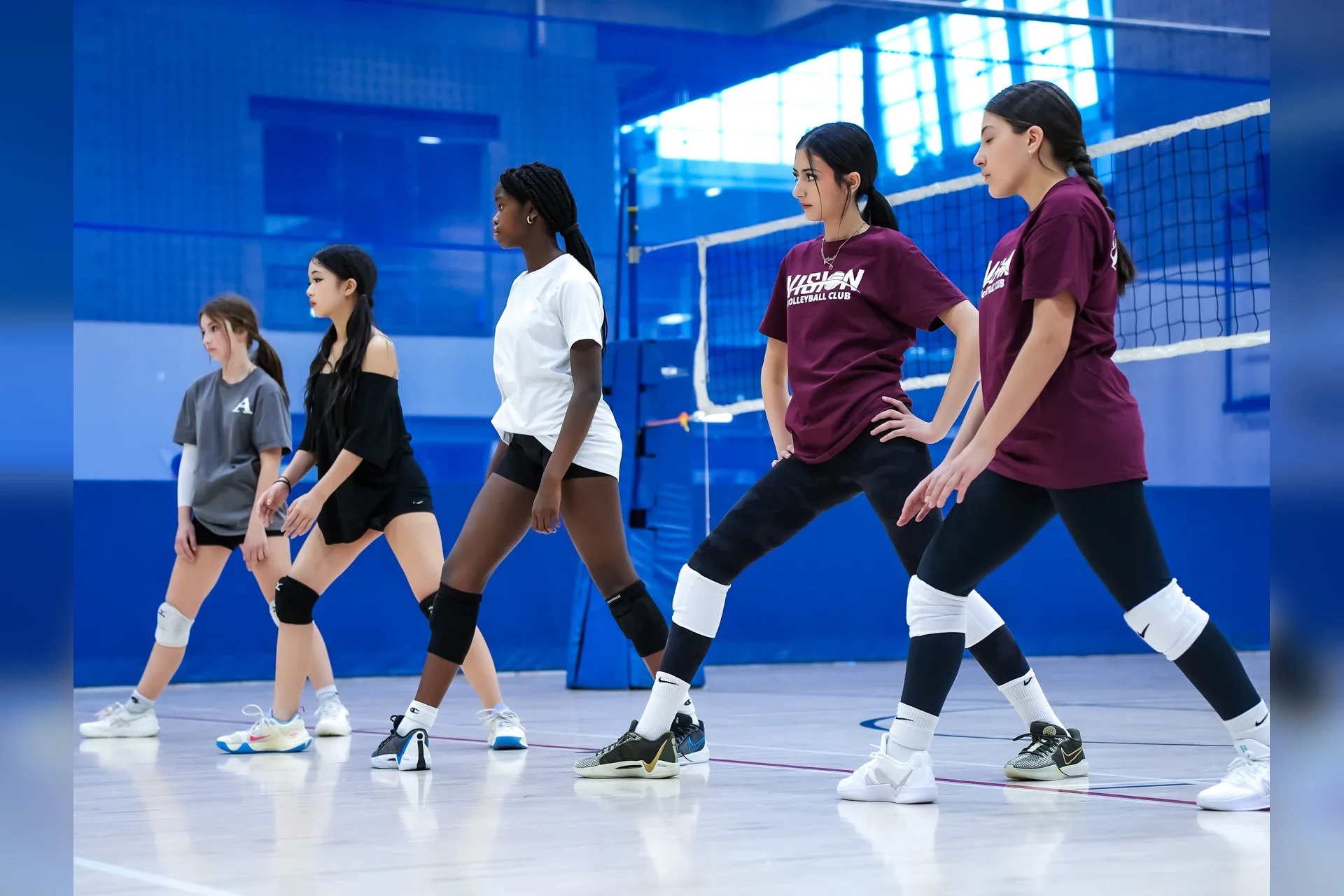
As club training ramps up for winter, practices get longer and jumps add up. Here is what sports medicine research says about the most common volleyball injuries, and the simple habits that help young athletes stay on the court.
Volleyball is one of the safest team sports for young athletes, with very little contact between opponents. But all that jumping, landing and swinging places real stress on the body. When practice time jumps from a short school season to several club sessions a week, small aches can turn into injuries that sideline players for weeks.
The good news: most common volleyball injuries are preventable. Here is where they happen, why, and what athletes, parents and coaches can do about it.
Ankle sprains: the most common volleyball injury
Research in sports medicine consistently identifies ankle sprains as the most common acute injury in volleyball. Most happen at the net, when a player lands on a teammate's or opponent's foot after a block or attack. A sprain is not a minor event: players can expect to miss around four to five weeks, on average, and the biggest risk factor for a new sprain is having sprained the same ankle before.
How to prevent it:
Train your balance. A well-known study of volleyball players found that a balance board program cut the risk of repeat ankle sprains in players with a previous sprain. Simple single-leg balance drills a few times a week help.
Land in your own space. Blockers should jump straight up and land where they took off, not drift into the centre line.
Rehab fully. After a sprain, finish your rehabilitation with a physiotherapist or athletic therapist before returning to full play.
Wear proper court shoes. Volleyball shoes with good grip and support are designed for quick side-to-side movement.
Knee pain: jumper's knee and safe landings
The knee takes the force of every jump and landing. The most common overuse injury is patellar tendinopathy, better known as jumper's knee, which causes pain just below the kneecap. Studies have found it affects a large share of elite players, and a systematic review linked it to stiff, short landings. Less often, an awkward landing can injure the ACL, a serious injury that usually needs surgery and months of recovery.
How to prevent it:
Land soft and quiet. Bend the hips and knees as you land, keep the knees over the toes and absorb the impact through the whole leg.
Warm up with purpose. Research on volleyball players supports dynamic warm-ups that include balance, trunk and leg exercises before every practice.
Build strength. Squats, lunges and hip exercises help the muscles share the load with the tendon.
Watch total jump volume, especially when athletes play on more than one team.
Shoulder pain: protecting the hitting arm
Serving and attacking ask the shoulder to move fast, through a big range of motion, hundreds of times a week. Sports medicine experts such as the American Academy of Orthopaedic Surgeons point to overuse problems like tendinitis and bursitis, caused by repeated overhead motion, as common volleyball shoulder injuries.
How to prevent it:
Strengthen the rotator cuff and shoulder blade muscles with light bands two or three times a week.
Use the whole body to hit. Power should come from the legs and trunk, not just the arm.
Warm up the shoulder with arm circles, band work and easy tosses before serving or hitting at full speed.
Rest is part of training
Many overuse injuries come from doing too much, too soon, with too little recovery. Orthopaedic specialists recommend that young athletes avoid playing one sport year-round, take regular breaks and limit the number of teams they play on at once. Good sleep, healthy meals and water matter too. And if pain lasts, gets worse or changes how an athlete moves, it is time to stop and see a doctor or physiotherapist.
Head injuries can happen too, usually from a collision or a fall. If a concussion is suspected, the athlete should stop playing right away and follow the Volleyball Canada concussion protocol.
Train smart with VISION
At VISION, injury prevention is built into how we coach: purposeful warm-ups, landing technique taught from day one and practice plans that balance hard work with recovery. For more tips, visit our injury prevention guide in Athlete Resources, and download our free e-book, The Volleyball Athlete's Manual, from the Training Library. Montréal athletes can put these habits into practice at our Winter Academy, which starts January 10, or at a Sunday drop-in session.