
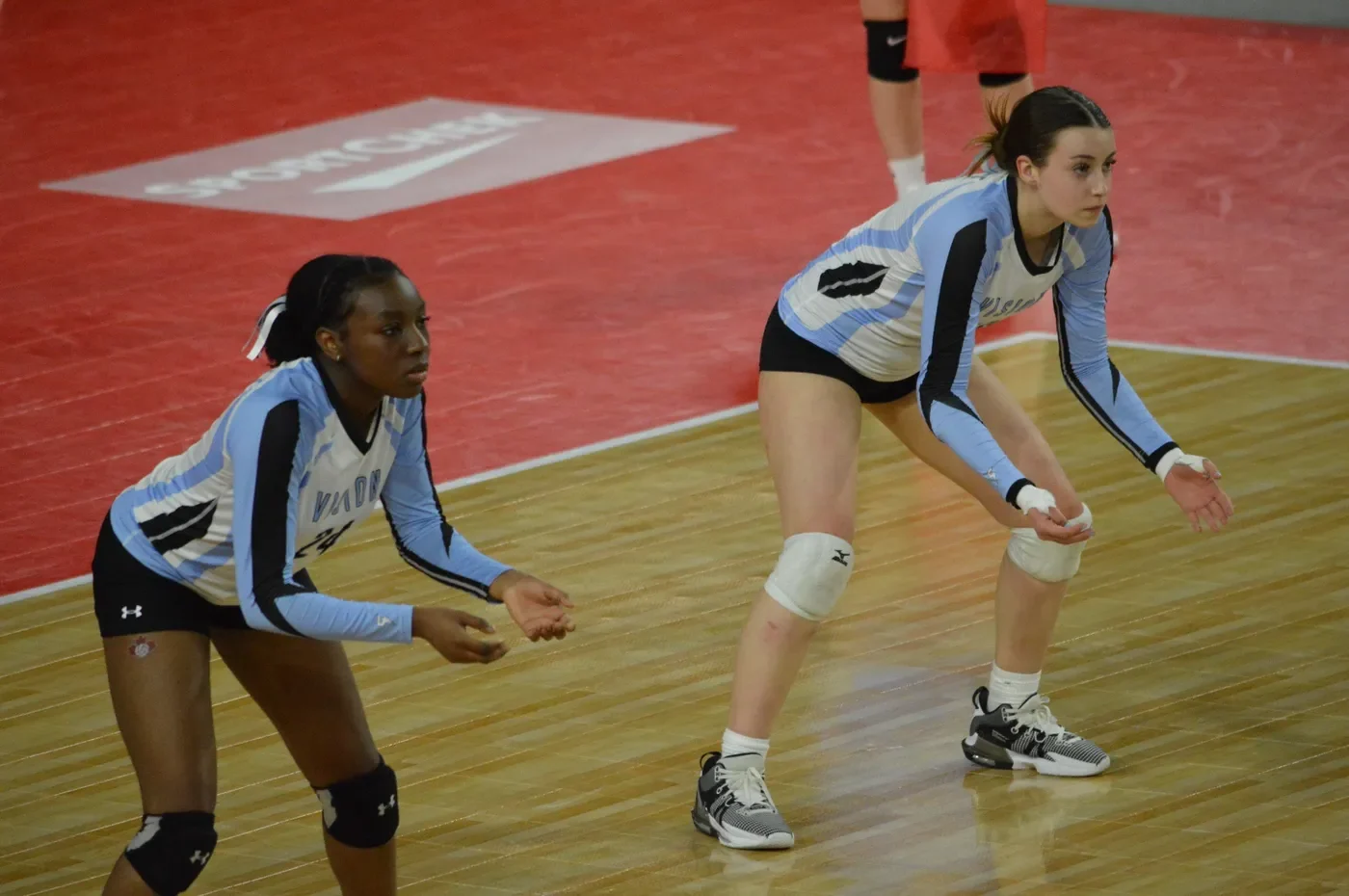
Volleyball asks a lot of the body in a small space: quick first steps, hard stops, jumps off two feet and dives to the floor. The right shoes and knee pads make all of that safer and easier. The wrong ones slip, pinch, or slide down the leg at the worst moment.
Here is what to look for, how they should fit, and how much you need to spend, whether your athlete is starting a first camp in Edmonton or trying out for club.
Do you really need volleyball shoes?
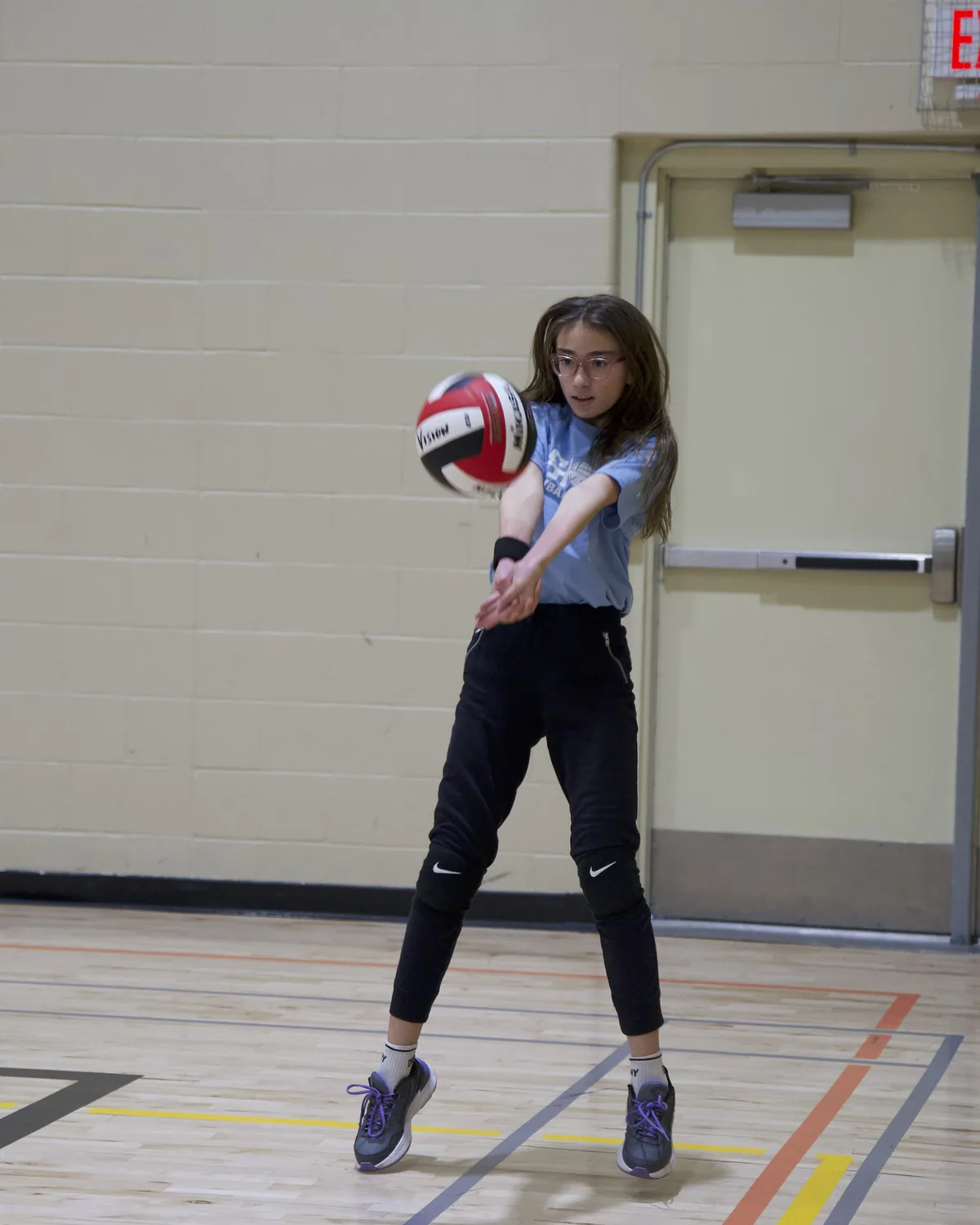
For a first camp or drop-in, clean indoor running or training shoes with non-marking soles will do. Once an athlete plays weekly, volleyball shoes are worth it. They are built for the movements the sport uses most:
Grip on gym floors. Gum rubber soles hold on wood and sport courts, so quick sideways steps do not slide.
Cushioning where you land. Extra support in the forefoot and heel softens the landing from every jump.
Lateral support. A firm side and heel keep the foot over the sole when an athlete stops and changes direction.
Light weight. Less to lift on every approach and block.
Running shoes are built to roll forward heel to toe. Their soft, raised heels can make sideways movement less stable, which is why coaches suggest switching once play becomes regular.
Volleyball shoes: what to look for
Shoe checklist
Gum rubber, non-marking sole (most Edmonton school and community gyms require non-marking soles)
Low or mid height, whichever feels steadier for your athlete
Firm heel counter that does not fold when you press it
Cushioning in the forefoot as well as the heel (players land on the balls of their feet)
Breathable upper, because tournaments mean long days
Flexes at the ball of the foot, not in the middle of the arch
Most major brands make good volleyball shoes, including ASICS, Mizuno, Nike and Adidas. Many shoes come in women's and men's versions with different widths and lasts, so try both if one feels narrow.
Low or mid-cut? Most players wear low or mid shoes for speed. Mid-cut shoes feel more secure around the ankle for some athletes. Neither replaces ankle strengthening or a brace if a physiotherapist has recommended one.
Fit and size
| Check | What good looks like |
|---|---|
| Toe room | About a thumb's width (1 cm) between the longest toe and the end of the shoe |
| Heel | No lifting or slipping when your athlete walks and jumps |
| Width | Snug across the middle of the foot without pinching the sides |
| Socks | Try them on with the socks worn to practice |
| Time of day | Shop later in the day, when feet are slightly larger |
| Growing feet | Room to grow is fine, but not so much that the foot slides; a loose shoe is a sprain risk |
Knee pads: what to look for
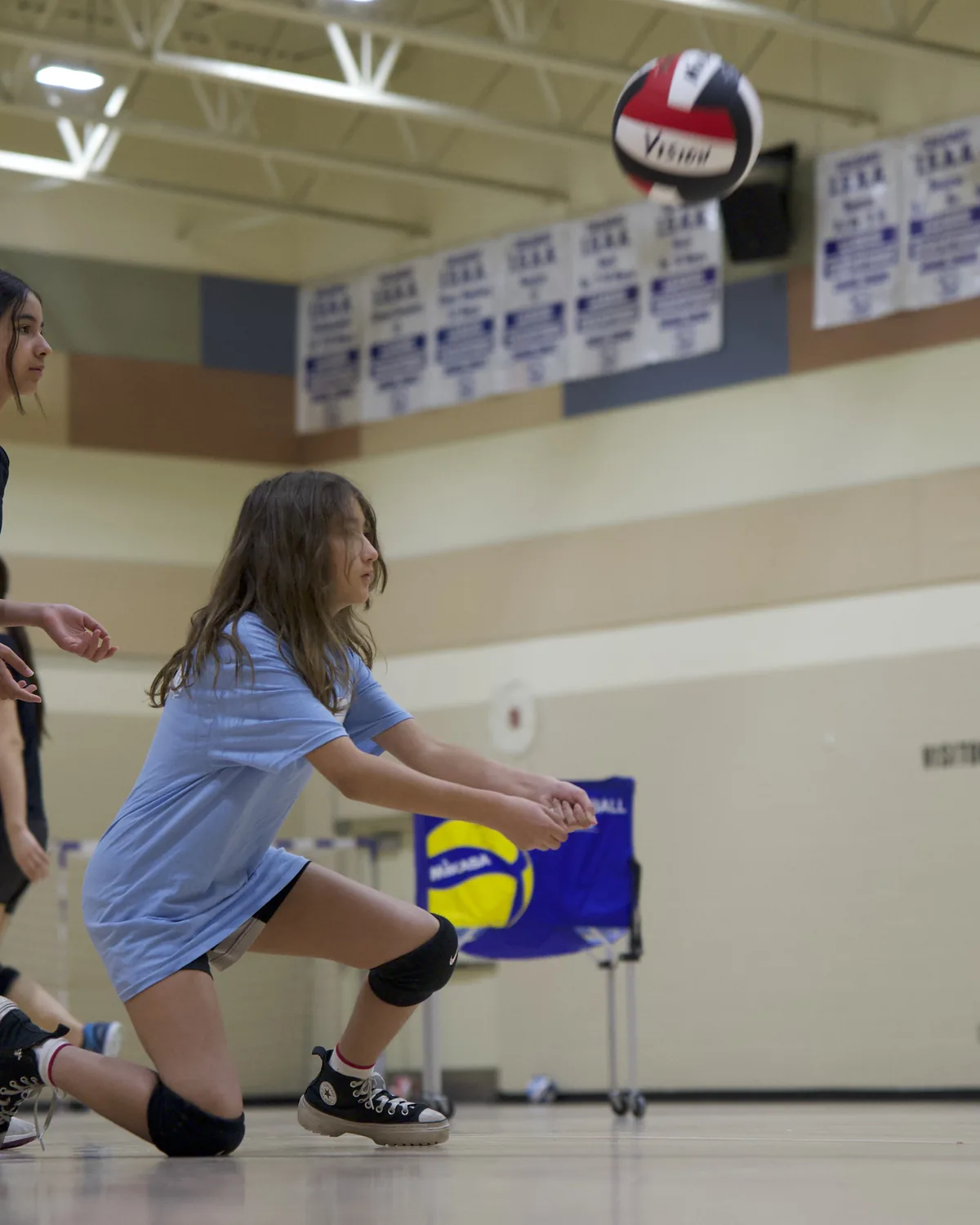
Knee pads protect against bruises and floor burns when players dive, roll and dig low. Coaches expect them at every VISION practice.
Knee pad checklist
Foam padding that covers the kneecap and the area just below it
A sleeve that stays in place when your athlete squats and lunges
Breathable fabric that does not trap heat
A low-profile pad for players who move a lot; thicker pads for liberos and defenders who hit the floor often
Machine washable (check the label)
Sizing knee pads. Most brands size by the measurement around the leg just above or below the knee. Measure with a soft tape and use that brand's chart. Pads should feel snug but not leave deep marks or cut off circulation.
Wearing them right. The padding sits over the kneecap, not below it. Pads that slip down usually mean the size is too big or the elastic is worn out.
What should you spend?
| Item | Typical price (CAD) | Notes |
|---|---|---|
| Youth volleyball shoes | about $80 to $150 | Last season's colours are often on sale and work just as well. |
| Adult and performance shoes | about $120 to $220 | Worth it for players training three or more times a week. |
| Knee pads | about $20 to $50 | Buy two pairs for tournament weekends so one can dry. |
Prices are typical ranges at sporting goods stores in late 2026 and vary by brand and sale.
Edmonton tips: make them last
Keep court shoes for the court. Snow, salt and gravel ruin gum soles fast. Wear boots to the gym and change inside.
Wipe the soles. A quick wipe on a damp towel before play brings back grip on dusty gym floors.
Air everything out. Take shoes and knee pads out of the bag after practice so they dry.
Watch the soles. When the tread is smooth or the cushioning feels flat, it is time for a new pair, often every season or two for weekly players.
Common questions
Can my child wear basketball shoes for volleyball? Yes, for beginners. Basketball shoes have good grip and support, though they are usually heavier than volleyball shoes.
Are knee pads required? VISION coaches ask every athlete to wear them. They prevent bruises and help players feel confident going to the floor.
Should volleyball shoes be tight? Snug, not tight. The heel should not slip, and there should be about a thumb's width of space at the toes.
How often should volleyball shoes be replaced? When the soles lose grip or the cushioning feels flat. For athletes who play weekly, that is often every one to two seasons.
Ready to play?
Gear helps, but coaching makes the difference. Volleyball Edmonton programs with VISION Elite Academy run for every level, from first camps to club teams.
See Edmonton volleyball programs
New to volleyball? Try a free camp.
Learn the language first: read Volleyball Terms Every New Player Should Know.