
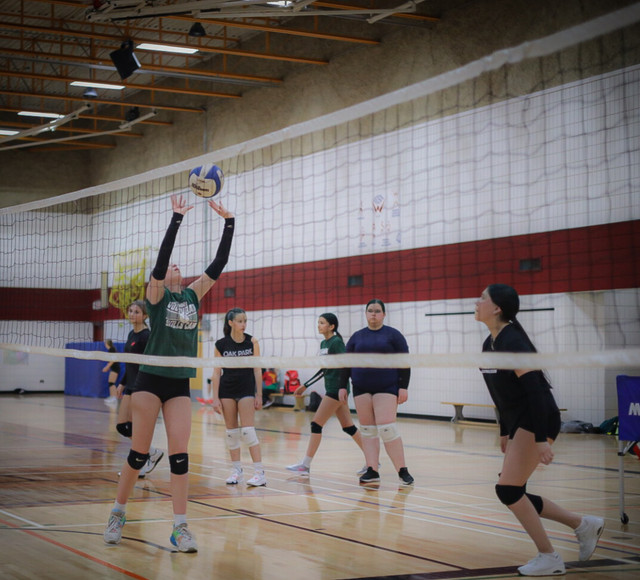
Few things frustrate a young setter more than being told they have “inconsistent hands.” One set feels clean, the next floats or stalls. Confidence dips, overthinking creeps in, and suddenly every contact feels different.
What’s often missed is this: inconsistent hands rarely start in the hands.
They’re the downstream effect of how setters learn early—and what they’re asked to solve before they’re ready.
Why inconsistency shows up in young setters
Young setters are asked to manage one of the most complex roles on the court while still developing basic coordination, timing, and spatial awareness.
When that demand outpaces development, inconsistency appears. Common early contributors include: • late footwork forcing rushed contact • unclear decisions at the point of contact • overcorrection after a mistake • practicing perfect reps without game variability Hands become inconsistent not because setters lack touch—but because the conditions around contact keep changing.
The hidden cause: late decisions
When a setter hasn’t decided where the ball is going before it reaches their hands, the hands are forced to solve the problem alone.
That leads to: • double contacts • soft pushes instead of releases • rushed flicks or holds In reality, the hands are reacting—not executing. Setters with consistent hands are consistent decision-makers first.
Why “Fix your hands” rarely works
Telling a setter to “soften their hands” or “clean up contact” often makes things worse.
Why? Because the setter becomes hand-focused under pressure. They hesitate. Rhythm disappears. Contact tightens.
Hand consistency is an outcome—not a cue. When we chase the outcome directly, we usually miss the cause. ** How inconsistent hands actually form**
In most cases, inconsistency develops when: • setters train mostly off perfect passes • footwork is rushed or skipped • contact is corrected without context • tempo isn’t emphasized The hands are asked to compensate for problems that should have been solved earlier in the chain.
How to retrain consistent hands
Retraining doesn’t start with hands—it starts before them.
Step 1: Fix the Feet Consistent hands come from balanced, early positioning. • move early • stop before contact • eliminate last-second reach Stable feet create predictable contact.
Step 2: Commit to Decisions Earlier Setters need permission to decide sooner—even if the choice isn’t perfect. • early decisions create smoother releases • late decisions force hand panic Confidence grows when hesitation disappears.
Step 3: Simplify the Release Young setters don’t need multiple release styles. • one consistent motion • repeatable tempo • predictable ball flight Consistency beats creativity early.
Step 4: Train Under Imperfect Conditions Perfect reps hide inconsistency. To retrain hands: • use off-target passes • vary tempo and height • reduce time between contacts Hands stabilize when the setter learns to adapt, not guess.
Step 5: Remove Fear From Mistakes Fear tightens hands.
Setters need space to: • miss without punishment • adjust without panic • trust process over outcome Relaxed setters release the ball better—every time.
What parents often see (and worry about)
Parents may notice setters who: • look smooth one drill • struggle the next • seem unsure or frustrated This doesn’t mean development is failing. It often means the setter is transitioning from mechanical control to real understanding.
That phase is uncomfortable—but necessary.
The bigger picture
Consistent hands don’t come from perfect technique alone. They come from: • early movement • clear decisions • stable balance • trust in rhythm When those pieces are aligned, the hands stop being the problem.
They become the solution.
Coach Luc Tremblay is the Founder and Head Coach of Volleyball Winnipeg. Luc has been coaching volleyball for 30+ years with athletes of all age classes and all abilities. He has developed most of the training techniques used by VISION coaches and is responsible for the coach development program at Volleyball Winnipeg. For more details on our Coach Resources, click here.