
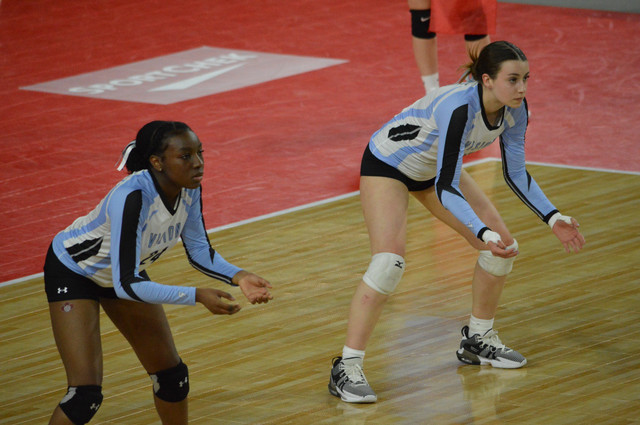
When a match tightens, rallies get longer, and points start to matter, defensive breakdowns suddenly multiply. Balls drop untouched. Coverage disappears. Players hesitate, collide, or stop moving altogether.
From the outside, it looks like nerves.
In reality, pressure rarely causes defensive mistakes. It exposes gaps in understanding, communication, and preparation.
What pressure actually changes
Pressure doesn’t make the game more complicated—it makes it faster and less forgiving. Under pressure: • decision time shrinks • margins disappear • hesitation is punished immediately • effort alone isn’t enough
Anything that relies on guessing, memorization, or late reaction starts to fall apart.
The illusion of “Trying Harder”
When teams feel pressure, the instinct is to try harder. Defenders: • chase balls outside their zones • overcommit early • dive instead of reposition • abandon spacing for effort
The intention is good—but effort without structure creates chaos.
Defensive success under pressure doesn’t come from more movement. It comes from better decisions made earlier.
The most common breakdown: late reads
The number one reason teams break down defensively is timing.
Players wait too long to read: • where the set is going • who is attacking • what options the hitter has
By the time they move, the play is already decided.
Under low pressure, late movement can be masked. Under high pressure, it’s exposed instantly.
Communication shrinks under stress
Pressure often silences teams. Players stop calling: • seam • tip • line • short
Not because they don’t know how—but because attention narrows. Athletes focus inward instead of outward.
When communication drops, defensive systems stop functioning. Everyone is technically in position—but no one is connected.
Role confusion gets amplified
Teams that rely on memorized systems often struggle the most under pressure. Why? Because when something unexpected happens—a bad pass, a broken play, a smart hitter—memorization has no solution.
Players hesitate, waiting for instruction instead of acting.
Defensive roles that aren’t deeply understood collapse first when stress rises.
Why strong teams look calmer under pressure
Teams that defend well late in matches don’t move more—they move earlier and less. They: • recognize patterns quickly • trust their responsibilities • communicate simply • stay connected through chaos
Calm defense isn’t emotional control—it’s structural confidence.
How teams can prevent defensive breakdowns
Preventing breakdowns starts long before match point. Strong programs: • train reading before reaction • teach roles before systems • reward early movement, not just effort • normalize mistakes during learning
Athletes who understand why they’re moving don’t freeze when things get hard.
What parents often see
Parents may notice that: • a team looks solid early • struggles late • seems to “fall apart” suddenly
That doesn’t mean confidence disappeared.
It usually means the team reached a moment where understanding—not effort—was required. And that’s a necessary step in development.
The bigger picture
Pressure doesn’t break teams. Lack of clarity does.
Teams that break down defensively under pressure aren’t failing—they’re being shown what needs to be strengthened. When athletes learn to read earlier, communicate consistently, and trust their roles, pressure stops being a threat. It becomes just another part of the game.
And that’s when defense holds—no matter the moment.
Coach Luc Tremblay is the Founder and Head Coach of Volleyball Winnipeg. Luc has been coaching volleyball for 30+ years with athletes of all age classes and all abilities. He has developed most of the training techniques used by VISION coaches and is responsible for the coach development program at Volleyball Winnipeg. For more details on our Coach Resources, click here
Share with a Friend