
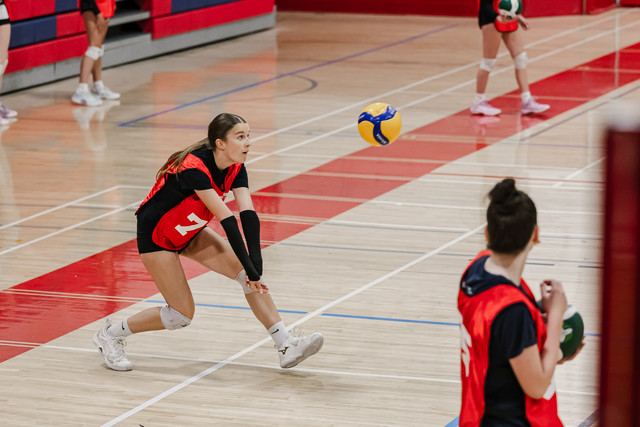
And confusing the two is one of the fastest ways to stall long-term development. At first glance, the difference feels subtle. An athlete can pass a ball, serve over the net, or hit a decent swing. Coaches and parents see success and assume learning has happened. But execution without understanding is fragile. It only works when conditions are perfect. Doing a Skill: The Surface Level
Doing a skill means an athlete can reproduce a movement – often in a controlled setting
Examples: • A player can serve the ball over the net during warm-ups • A hitter can swing hard when the set is perfect • A passer looks solid when the ball comes straight at them
These are real achievements, especially for young athletes. But they rely heavily on: • repetition without variation • predictable timing • low pressure • external cues (“do it like this”) When conditions change—faster play, tighter space, louder gyms, tougher opponents—the skill often falls apart. That’s not a failure of effort. It’s a sign the athlete hasn’t yet understood the skill.
Understanding a Skill: The Transfer Layer
Understanding a skill means the athlete knows: • why they’re doing it • when to use it • how to adjust it This is where volleyball stops being a set of drills and starts becoming a game.
An athlete who understands a skill can: • adapt their platform angle when the serve floats late • adjust footwork when the set is off the net • change shot selection based on the block and defense • recover quickly after a mistake because they know what broke down Understanding allows skills to transfer—from drills to games, from practice gyms to tournament weekends. This is also where confidence comes from. Not confidence based on “I hope this works,” but confidence rooted in problem-solving.
Why this matters more than ever
Youth athletes today are exposed to more training than ever before—private lessons, camps, clinics, videos, social media tips. But more exposure doesn’t automatically mean deeper learning.
In fact, athletes can accumulate skills faster than they accumulate understanding. That’s why you’ll sometimes see: • technically talented players freeze under pressure • athletes who look great in practice but disappear in games • players who repeat the same mistake despite constant feedback They’re doing the skill—but they don’t yet understand it.
How clubs should teach for understanding
Skill understanding doesn’t come from explaining more—it comes from teaching differently.
Effective development environments: • vary drills instead of repeating them endlessly • connect skills to game situations • ask athletes questions instead of giving constant answers • allow mistakes as part of learning, not something to avoid • emphasize reading the game, not just executing movements This approach takes patience. Progress looks less flashy early on—but it produces athletes who are adaptable, resilient, and coachable long term.
What this means for parents
If your athlete sometimes struggles when things speed up, that doesn’t mean they’re “behind.” Often, it means they’re transitioning from doing to understanding. That phase can feel uncomfortable. Performance may dip briefly. But that’s often where the deepest learning happens. The goal isn’t early perfection—it’s durable skills that hold up under pressure, change, and growth.
The Long Game
Volleyball is not a sport of memorized movements. It’s a game of reading, reacting, and adjusting in real time. Athletes who understand skills: • stay in the game longer • handle adversity better • develop leadership and confidence • continue improving even when coaching changes That’s the difference between short-term success and long-term development.
Coach Luc Tremblay is the Founder and Head Coach of Volleyball Winnipeg. Luc has been coaching volleyball for 30+ years with athletes of all age classes and all abilities. He has developed most of the training techniques used by VISION coaches and is responsible for the coach development program at Volleyball Winnipeg.