
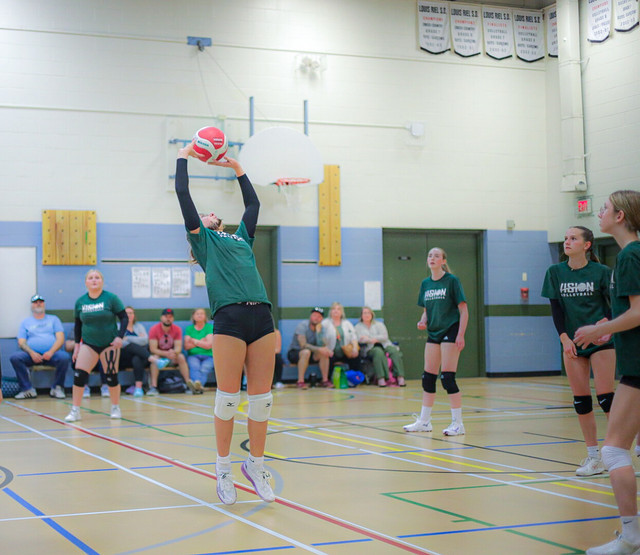
Setting often looks clean in practice and shaky in competition. That gap frustrates athletes, parents, and coaches alike. The usual explanation is nerves or confidence—but most breakdowns under pressure aren’t emotional. They’re structural.
Some setting fundamentals are designed for calm conditions. Others are built to survive disorder.
Only the second group holds up when the game gets fast.
Why Setting breaks down under pressure
Pressure doesn’t create new problems—it exposes existing ones.
Under stress: • the ball arrives faster • passes are less predictable • decision time shrinks • margins disappear If a setter’s fundamentals rely on perfect conditions, they collapse as soon as those conditions disappear.
That’s why some setters look sharp in drills but struggle late in matches. Their technique works—until it’s tested.
Fundamental #1: Early information beats perfect hands
Setters who hold up under pressure don’t wait for the ball to arrive before deciding.
They read: • the quality of the pass • the location of the block • hitter availability • defensive positioning Setters who struggle often fixate on hand shape and contact quality while missing early cues. By the time the ball touches their hands, they’re already late.
What holds up: Reading early and committing early—even if the set isn’t perfect.
Fundamental #2: Feet first, hands second
Hands get the attention, but feet create the option.
Under pressure, setters who rely on arm reach or last-second adjustments lose control. Their sets float, drift, or rush hitters.
Setters with strong fundamentals: • move early • stop before contact • create balance before touching the ball Good footwork gives setters time. Time gives them choices.
Fundamental #3: Neutral body positions
Many setters develop habits that work in calm drills but fail under speed—overturning, drifting, or leaning into sets.
Under pressure, those habits amplify errors.
Setters who hold up stay neutral: • shoulders square or intentionally angled • weight centered • momentum controlled Neutral positions don’t look flashy—but they survive chaos.
Fundamental #4: Decision simplicity
Under pressure, complexity is the enemy.
Setters who succeed don’t try to run everything. They simplify: • safest hitter in trouble • highest margin option under stress • smartest choice, not the prettiest Strong fundamentals include knowing when not to force creativity.
Fundamental #5: Consistent release. Not perfect contact
Perfect hand contact is ideal—but consistency matters more. Setters who chase perfection under pressure often hesitate. That hesitation breaks rhythm.
Setters who hold up: • trust their release • keep tempo predictable • accept “good enough” when needed Pressure rewards rhythm, not perfection.
How these fundamentals are built
Fundamentals that survive pressure don’t come from static reps. They’re developed through: • imperfect passes • time constraints • decision-based drills • game-like chaos Setters need to practice solving problems, not just executing movements.
What parents often notice
Parents may see setters who: • look confident early • struggle late • appear inconsistent across matches That inconsistency usually isn’t mental weakness—it’s a fundamental mismatch. The skills haven’t yet been trained for speed and stress.
Learning to set under pressure often looks messy before it looks reliable.
The bigger picture
Setting isn’t about controlling the ball—it’s about managing the moment.
Fundamentals that hold up under pressure: • create trust with hitters • stabilize teams in chaos • allow setters to lead instead of react When setters are trained for reality—not perfection—they don’t just survive pressure.
They control it.
Coach Luc Tremblay is the Founder and Head Coach of Volleyball Winnipeg. Luc has been coaching volleyball for 30+ years with athletes of all age classes and all abilities. He has developed most of the training techniques used by VISION coaches and is responsible for the coach development program at Volleyball Winnipeg. For more details on our Coach Resources, click here.