
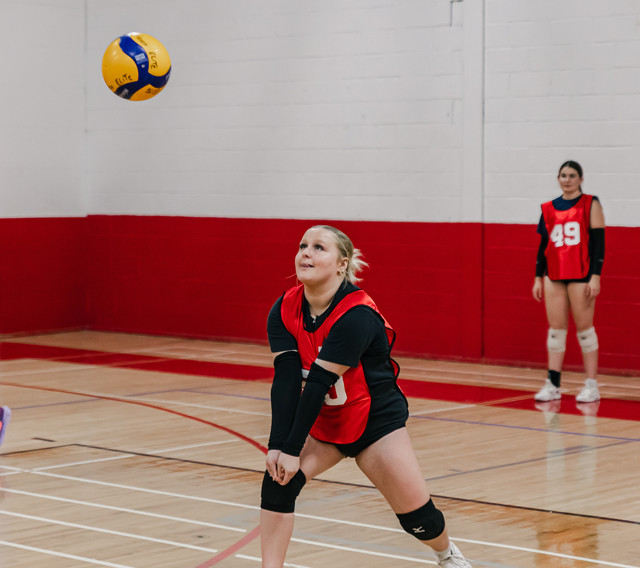
Passing is often described as the most basic skill in volleyball. Athletes learn it early, repeat it often, and are told it’s the foundation of everything that follows.
But that framing can be misleading. Because passing isn’t just a skill you do. It’s a chain of decisions you make—often in less than a second. And when passing breaks down, it’s rarely because an athlete “can’t pass.” It’s because one or more decisions in that chain didn’t happen in time. ** Why passing is misunderstood** From the outside, passing looks simple: • get behind the ball • angle the platform • send it to target
So when a pass misses, the correction is often mechanical: “Angle your arms more.” “Stay lower.” “Watch the ball.”
Those cues aren’t wrong—but they’re incomplete. Because by the time the ball touches the platform, most of the work is already done. ** The Decision chain behind every pass** Before contact ever happens, a passer has already made multiple decisions:
- Serve recognition Is it float or topspin? Short or deep? Fast or slow?
- Trajectory judgment Where will this ball land—and how quickly is it dropping?
- Movement choice Do I move first? Hold space? Drop step? Shuffle?
- Body positioning Do I square to target or angle off my midline?
- Platform adjustment How much angle and firmness does this ball need?
Each decision influences the next. Miss one, and the pass suffers—no matter how “good” the athlete’s technique looks.
That’s why two athletes with identical mechanics can produce very different results.
Why good passers look calm Elite passers don’t look rushed—not because the game is slower for them, but because their decisions are faster.
They aren’t reacting at contact; they’re responding early.
They’ve learned to: • read servers instead of chasing balls • move efficiently instead of dramatically • adjust platforms subtly instead of overcorrecting Their calm isn’t confidence alone—it’s understanding.
How passing gets taught too narrowly
Many early passing environments focus heavily on repetition: • lots of balls • predictable serves • minimal variation This builds comfort, but not adaptability. Athletes learn how to pass one kind of ball, in one kind of setting—but not how to solve new passing problems. When game conditions change—and they always do—the skill doesn’t transfer. That’s when athletes start guessing instead of deciding.
Teaching passing as a decision skill
Effective passing development goes beyond mechanics.
It includes: • varied serve speeds and trajectories • late movement cues • decision-making under time pressure • learning why a pass worked or didn’t
Coaches who teach passing well don’t just correct arms—they ask questions: • What did you see early? • When did you decide to move? • What option did you choose, and why? This turns passing from a reflex into a process.
What parents often notice – and misinterpret
Parents may see an athlete who passes well one day and struggles the next. That inconsistency is frustrating—but it’s often a sign of learning, not regression.
As athletes begin making decisions instead of memorizing movements, performance can temporarily fluctuate. That’s normal.
Consistency returns once decisions become automatic—not before.
The Bigger Takeaway
Passing isn’t about perfection. It’s about problem-solving.
The athletes who become reliable passers aren’t the ones who repeat a movement the most—they’re the ones who learn to make better decisions, earlier and under pressure.
When passing is taught as a chain of decisions, athletes gain: • confidence under pressure • adaptability across levels of play • skills that hold up in real matches And that’s when passing stops being a liability—and becomes a strength teams can trust.
Coach Luc Tremblay is the Founder and Head Coach of Volleyball Winnipeg. Luc has been coaching volleyball for 30+ years with athletes of all age classes and all abilities. He has developed most of the training techniques used by VISION coaches and is responsible for the coach development program at Volleyball Winnipeg.