
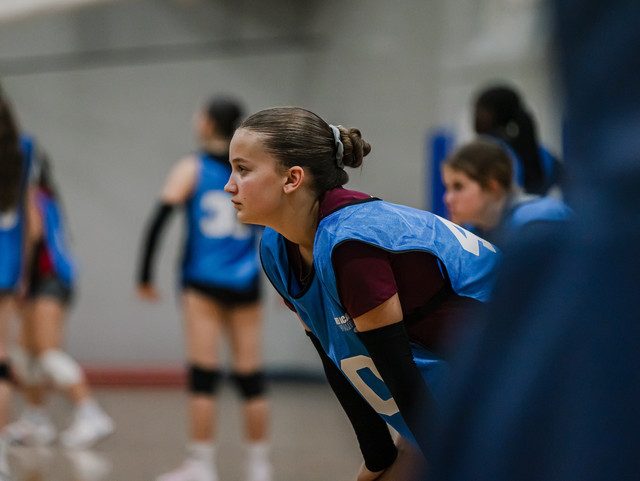
How to Handle Negative Self-Talk: The Voice That Can Win or Lose a Match
When Your Biggest Opponent Lives in Your Head
Every athlete knows that voice — the one that shows up right after a mistake. “You always miss that serve.” “You’re not good enough.” “They’re better than you.”
That inner critic can hit harder than any spike. But here’s the truth: every player — from weekend warriors to Olympians — wrestles with self-talk. The difference between great athletes and frustrated ones isn’t that they don’t hear it. It’s that they know how to handle it.
1. Notice the Voice, Don’t Become It
The first step isn’t to fight your self-talk — it’s to notice it. When you miss a serve or shank a pass, your brain fires automatic thoughts. They’re fast, emotional, and often exaggerated.
Instead of reacting, try pausing for half a second and thinking: “Okay, that’s the negative voice again.”
That little moment creates distance. You’re no longer inside the thought — you’re observing it. That shift from “I’m bad” to “I’m thinking I’m bad” is massive. It puts you back in control.
Pro Tip: Watch post-game interviews of top players. Notice how often they say, “I didn’t execute that the way I wanted, but I’ll fix it.” That’s trained thinking.
2. Replace Criticism with a Cue
Once you recognize the negative pattern, replace it with something actionable.
For example:
- “You always miss serves” → “Toss higher, finish through.”
- “You’re too slow” → “Explode on first step.”
- “Don’t mess up” → “See the ball, trust your hands.”
This works because your brain can’t process a ‘don’t’. When you say, “Don’t miss,” it still visualizes missing. Give it something clear to do instead.
Think of it like coaching yourself — not scolding yourself.
3. Train Your Inner Voice Daily
Mental habits are just like muscle memory. The more you practice healthy self-talk, the faster your brain rewires under stress.
Try this three-step routine:
- Reset: When something goes wrong, take one deep breath.
- Reframe: Use a short cue phrase you’ve practiced (“next ball,” “reset,” “I’ve got this”).
- Refocus: Lock eyes on one external cue — the ball, your teammate’s call, the court lines.
It takes practice, but it works. Over time, your self-talk becomes part of your performance routine — automatic, reliable, and empowering.
4. Coaches and Parents: Model the Mindset
Athletes mirror what they hear. If coaches or parents get visibly frustrated, that tone becomes the athlete’s inner voice.
Instead, model calm correction:
- “That was a tough one — shake it off.”
- “I love how you adjusted on that play.”
- “Good read — next time, just square your shoulders.”
Those messages train athletes to self-coach, not self-criticize.
Final Whistle
Negative self-talk is normal — it’s part of being human. The goal isn’t to silence it; it’s to guide it. Every time you shift from “I’m terrible” to “Here’s how I can fix it,” you’re training one of the most powerful muscles you have: your mind.
At Volleyball Winnipeg and Volleyball Calgary, we teach more than skills — we teach athletes how to think like champions. Learn more about our upcoming camps and leagues Here and build confidence that lasts both on and off the court.