
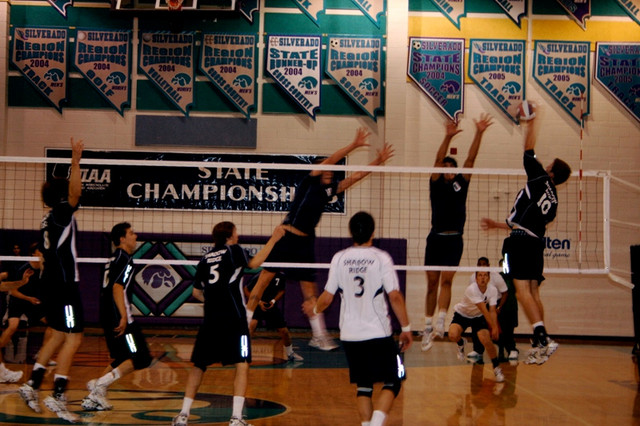
Few topics cause more confusion in youth volleyball than defensive systems. Parents hear perimeter and rotation and assume one must be more advanced, more aggressive, or more “correct.”
In reality, both systems can work. Both can fail. And neither matters if athletes don’t understand their responsibilities within them.
What defensive systems are actually for
Defensive systems exist to answer one basic question:
Where do we put players so the court is covered efficiently? They don’t guarantee digs. They don’t replace effort. They don’t fix late reads.
They simply organize space.
Understanding that distinction is critical.
Perimeter Defense: Protecting the deep court
Perimeter defense places defenders deeper and wider, prioritizing hard-driven balls to the corners and seams.
What it emphasizes: • reading hard attacks • staying off the net • digging driven balls • keeping defenders behind the block
Why it’s often used with developing teams: • positioning is intuitive • spacing is easier to visualize • fewer moving parts
When athletes understand their spacing and responsibilities, perimeter defense provides clarity and stability—especially early in development.
Where it breaks down: • when defenders stand and wait • when tips and roll shots aren’t recognized early • when players rely on reaction instead of reading
Rotation Defense: Protecting the short court
Rotation defense shifts defenders forward, rotating players into coverage for tips, roll shots, and sharp angles.
What it emphasizes: • anticipation • early reading • coordinated movement • communication
This system is often introduced as teams face smarter attackers who don’t rely solely on power.
Why it’s challenging for young athletes: • timing matters more • movement must start earlier • role clarity is essential
Without understanding, rotation defense feels chaotic instead of strategic.
The biggest misconception about defensive systems
Many people believe rotation defense is “more advanced” and perimeter defense is “basic.” That’s not accurate.
Rotation defense demands more reading, communication, and decision-making. If athletes don’t yet have those skills, the system exposes gaps instead of solving them.
Perimeter defense isn’t outdated—it’s appropriate when it matches the team’s ability to read the game.
Why systems break down at the youth level
Defensive systems fail most often because: • athletes don’t know when to move • players don’t know who is responsible • defenders react instead of anticipate • communication is unclear or absent
When a ball drops, it’s rarely because the system was wrong—it’s because roles inside the system weren’t understood.
How coaches decide which system to use
Strong programs don’t ask, “Which system is better?”
They ask: • Can our athletes read attacks early? • Can they move on time? • Can they communicate consistently?
If the answer is no, simpler structure usually leads to better execution.
As understanding improves, systems can evolve.
What parents often notice
Parents may see: • defenders moving but not arriving • open space despite “correct” positioning • confusion after a system change
Those moments are often part of learning—not failure. When athletes are learning to read instead of react, performance may dip briefly before it improves.
The Long-term goal
The goal isn’t to master one defensive system. It’s to develop defenders who: • read the game early • understand spacing • move with purpose • communicate under pressure
Athletes with those skills adapt easily—regardless of the system.
The bigger picture
Defensive systems organize where players start. Reading and role clarity determine whether the ball is defended.
Perimeter and rotation defense are tools. Understanding is the real system.
And once athletes have that, the court gets a lot smaller.
Coach Luc Tremblay is the Founder and Head Coach of Volleyball Winnipeg. Luc has been coaching volleyball for 30+ years with athletes of all age classes and all abilities. He has developed most of the training techniques used by VISION coaches and is responsible for the coach development program at Volleyball Winnipeg. For more details on our Coach Resources, click here
Share with a Friend