
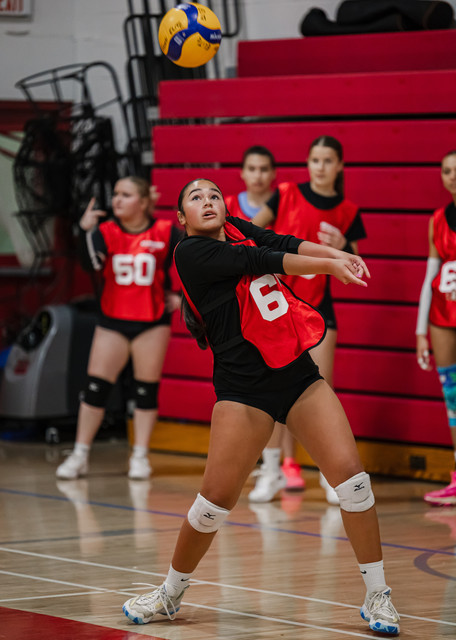
Defense is often described as effort, hustle, or quickness. Athletes are told to “react,” “go get it,” or “lay out.” And while effort absolutely matters, reaction alone is rarely what separates consistent defenders from struggling ones.
Strong defense starts before the ball is hit. Defense is not about how fast you move after contact—it’s about how much information you’ve gathered before it.
Why reaction is an incomplete explanation
When defenders are late, the assumption is usually that they were slow.
In reality, most defensive breakdowns happen because: • the defender didn’t recognize the hitter’s options early • positioning was based on guessing, not reading • movement started after contact instead of before it By the time the ball is hit, it’s often too late to “react” effectively.
What defenders are actually reading
Effective defenders are constantly processing information, even when they’re standing still.
Before the attack, they’re reading: • pass quality and setter options • hitter approach speed and angle • body position and arm swing cues • block location and timing Each of these inputs narrows the range of possible outcomes.
Good defenders don’t chase the ball—they narrow the problem.
Why young athletes struggle with defense
Many young defenders are taught to wait and react. They’re praised for effort, dives, and saves—but not always for positioning or anticipation.
This creates habits where: • defenders stay flat-footed • movement is late and explosive • effort compensates for poor reads It looks active—but it’s inefficient. As the game speeds up, that approach breaks down quickly.
The difference between guessing and reading
Guessing feels like reading—but it isn’t.
Guessing is committing without evidence. Reading is committing because of evidence.
When defenders guess: • they overcommit early • they’re vulnerable to tips and changes • confidence drops after missed reads
When defenders read: • movement is smaller and earlier • adjustments are calmer • coverage feels easier The game slows down—not because the ball moves slower, but because decisions happen sooner.
How defense should be taught
Defense development shouldn’t start with movement—it should start with awareness.
Strong defensive training: • teaches athletes where to look first • connects hitter cues to likely outcomes • reinforces positioning before contact • rewards early movement, not late saves Drills that only emphasize reaction speed miss the skill that matters most.
What parents often notice
Parents may see an athlete who: • works incredibly hard • dives often • still struggles to control the ball That’s not a lack of effort. It’s often a lack of information. As defenders learn to read the game, their movement becomes quieter—and their success rate rises. Ironically, they may look less busy while becoming far more effective.
Why reading comes with experience
Reading takes time because it relies on pattern recognition. Athletes need: • repeated exposure to different attackers • opportunities to fail safely • feedback that explains why a ball landed where it did This learning curve is normal—and necessary.
The bigger picture
Defense isn’t about reacting to chaos. It’s about understanding patterns. Athletes who learn to read the game: • arrive earlier • move less • stay balanced • control the ball more consistently Reaction will always matter—but reading is what makes reaction useful.
And once athletes learn that, defense stops feeling frantic—and starts feeling intentional.
Coach Luc Tremblay is the Founder and Head Coach of Volleyball Winnipeg. Luc has been coaching volleyball for 30+ years with athletes of all age classes and all abilities. He has developed most of the training techniques used by VISION coaches and is responsible for the coach development program at Volleyball Winnipeg. For more details on our Coach Resources, click Here