
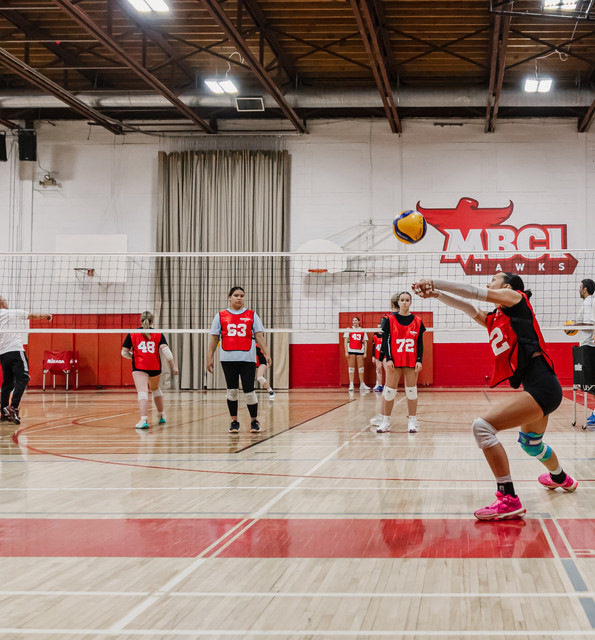
Every winter, the same passing issues reappear across gyms, age groups, and levels. They’re not random, and they’re not a sign that athletes aren’t learning.
They’re the predictable result of early-season pressure, limited time, and environments where getting the ball up feels more urgent than passing it well.
The good news? These habits are common—and fixable—when they’re identified early and addressed with intention.
Habit #1: Reaching instead of moving
This is the most common passing habit we see.
Instead of moving their feet, athletes extend their arms toward the ball and hope for contact. It works occasionally, especially against slower serves, which is exactly why it sticks.
Why it forms: • Early-season pace feels fast • Athletes want to react quickly • Reaching feels faster than moving
Why it hurts development: Reaching reduces control, limits angle options, and makes passing inconsistent under pressure.
How to fix it: • Emphasize early movement, not last-second contact • Use drills that reward arriving early rather than saving late • Reinforce that small steps beat long reaches
Habit #2: Locking the platform too early
Many athletes set their arms and platform before they’ve fully read the ball. Once locked in, they lose the ability to adjust.
Why it forms: • Athletes are told to “get your platform ready” • Early reps lack variation • Fear of being late overrides patience
Why it hurts development: Early locking forces athletes to guess instead of decide. When the ball moves late—as float serves often do—the pass breaks down.
How to fix it: • Teach athletes to stay soft until the last moment • Add late movement and float variation into drills • Talk about timing of platform, not just shape
Habit #3: Passing with the arms instead of the body
When passes fly long or spray wide, athletes often try to fix it by muscling the ball with their arms.
Why it forms: • Poor footwork creates poor spacing • Athletes want immediate correction • Strength feels like control
Why it hurts development: Arm-driven passing reduces consistency and breaks down under faster serves.
How to fix it: • Refocus on body position and balance • Reinforce quiet arms and stable posture • Teach athletes that power comes from positioning, not force
Habit #4: Drifting after contact
Some athletes pass and immediately drift forward, backward, or sideways, losing balance and readiness.
Why it forms: • Overcommitment to the ball • Lack of reset awareness • Early focus on contact only
Why it hurts development: Drifting delays recovery and limits the ability to transition into the next play.
How to fix it: • Emphasize stopping on contact • Include reset and transition expectations after every pass • Coach the skill beyond first contact
Habit #5: Guessing instead of reading
When athletes guess serve direction, speed, or depth, passing becomes reactive instead of intentional.
Why it forms: • Predictable serving early in the season • Limited serve-receive variability in practice • Overreliance on patterns instead of cues
Why it hurts development: Guessing works until it doesn’t. Under pressure, it creates hesitation and panic.
How to fix it: • Teach serve recognition cues (toss, contact, body position) • Vary serve types and locations early • Ask athletes what they saw—not just what they did
Why these habits appear every winter
Winter volleyball is intense. Gym time is tight. Athletes want results now. Coaches balance development with competition.
In that environment, habits that “work enough” can sneak in quietly.
That doesn’t mean something has gone wrong—it means the season is doing what seasons do.
The role of consistency in fixing habits
The Role of Consistency in Fixing Habits Bad habits don’t disappear with one correction. They change through: • consistent language • repeated reinforcement • patience during temporary performance dips When athletes understand why a habit matters—and are supported while changing it—improvement sticks.
What parents should know
If your athlete is being corrected on passing basics mid-season, that’s not a setback. It’s often a sign of intentional development.
Fixing habits early prevents bigger issues later—when the pace is faster, pressure is higher, and correction is harder.
The bigger picture
Passing habits define how athletes handle pressure, not just how they start rallies. Winter exposes habits—but it also gives athletes the opportunity to rebuild them correctly. When clubs commit to fixing passing habits instead of hiding them, athletes gain skills they can trust all season long—and beyond.
Coach Luc Tremblay is the Founder and Head Coach of Volleyball Winnipeg. Luc has been coaching volleyball for 30+ years with athletes of all age classes and all abilities. He has developed most of the training techniques used by VISION coaches and is responsible for the coach development program at Volleyball Winnipeg.