
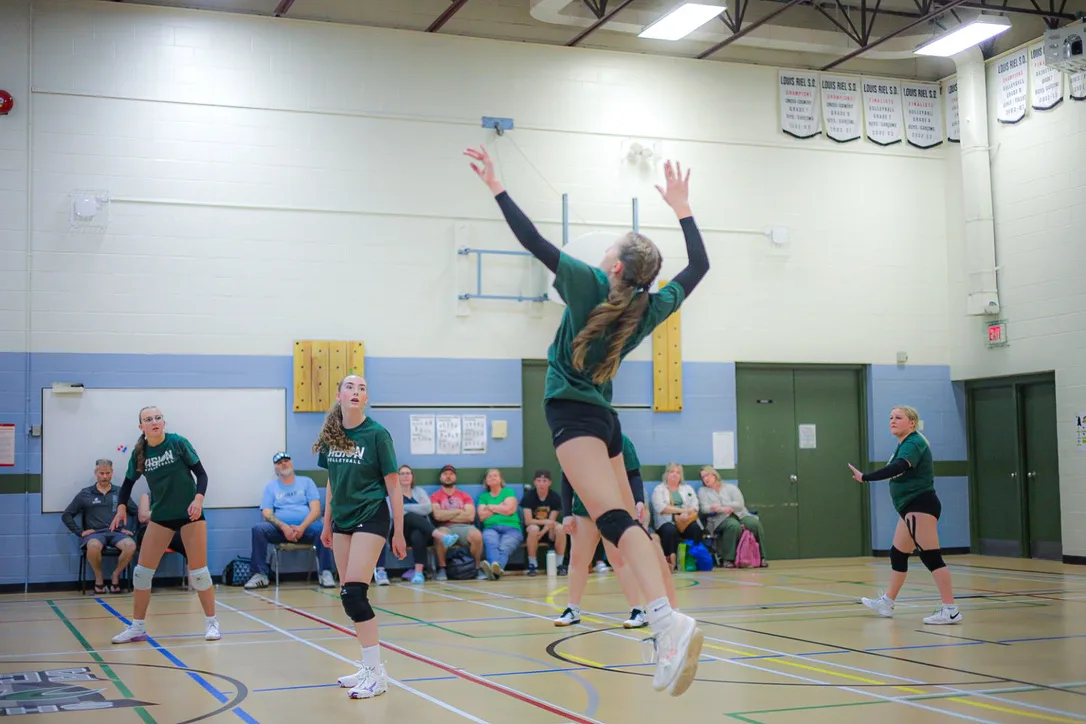
With school seasons wrapping up and club tryouts underway across BC, many Fraser Valley parents are asking the same question. Here is an honest look at what each one offers, and why the athletes who improve most usually play both.
If your athlete just finished a school volleyball season, you may be wondering what comes next. Is school volleyball enough? Is club worth the extra time and cost? Do the best high school players really play club all winter? It is one of the most common questions we hear during tryout season, and the answer depends on your athlete's goals. For players who want to keep improving, though, the short answer is yes: they need both.
What school volleyball does well
School volleyball is where most athletes first fall in love with the game. Playing for your school builds pride, friendships and a sense of belonging, and school coaches give countless hours to make it happen. It is also accessible: no tryout fees in most cases, practices right after class and games in your own gym in front of classmates. For many kids, it is the perfect introduction to the sport.
The problem: the school season is short
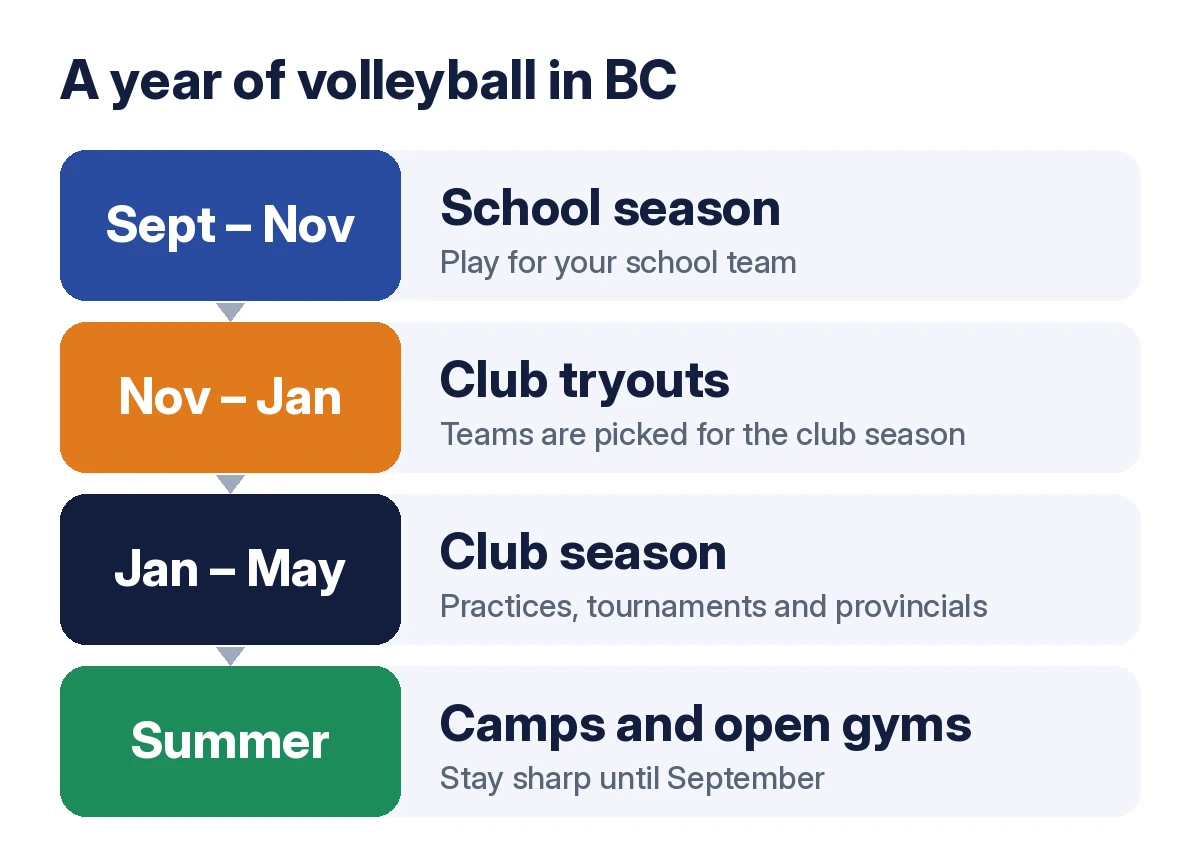
In BC, school volleyball is a fall sport. Teams start in September, and the season ends with provincial championships in late November. That leaves roughly ten to twelve weeks of practice, often shared with gym space, field trips and exams. Some of those weeks are spent just learning a new lineup.
That is simply not enough time to make big changes in technique or game sense. Real development takes months of steady, focused repetition. A player who touches a ball only during the fall can lose much of that progress before the following September, and the cycle begins again.
Where development really happens: the club system
Club volleyball fills that gap. In BC, the club season runs from January to May, with tryouts starting in November and continuing into early January. Club teams train regularly through the winter and spring and compete in tournaments that lead up to provincial championships.
More and more, the club system is where athletes are expected to develop. Coaches have the time to build skills step by step, players face strong competition from across the province and athletes learn specific positions in depth. Volleyball BC reports that the number of club athletes grew by a third in just two years, and it lists club participation as an essential part of development for players pursuing Team BC.
Walk into the school gym ready to compete
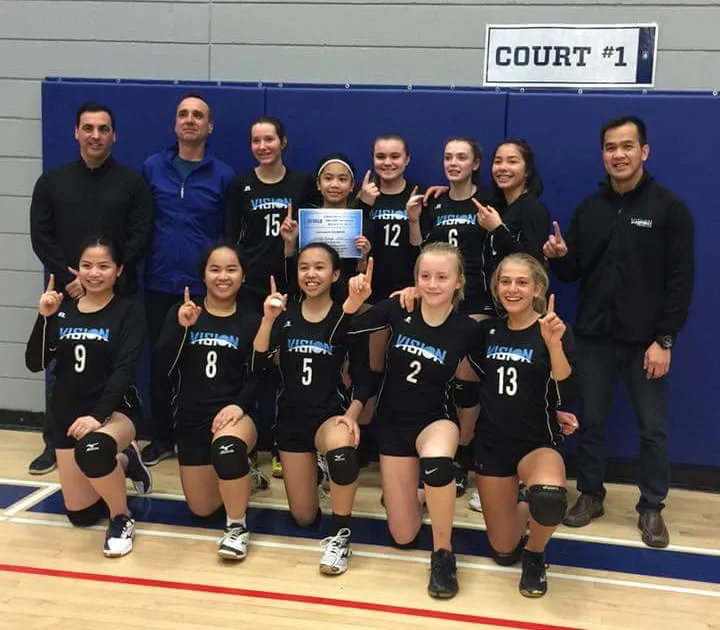
Here is the biggest change of all: high school coaches increasingly expect players to arrive already prepared. With such a short season, there is little time to teach the basics. Athletes who spent the winter and spring in club walk into tryouts with confident passing, consistent serves and a better understanding of the game, and they are often the ones who make the team, start and lead.
In other words, club does not replace school volleyball. It makes school volleyball better.
The two seasons fit together
The two seasons fit together almost perfectly: school in the fall, club in the winter and spring, and camps or open gyms in the summer.
Is club right for your athlete?
Club volleyball can feel like a big step, especially for first-timers. A few questions can help: Does your athlete want to keep playing after the school season ends? Are they willing to train two or three times a week? Do they want to play at a higher level in high school or beyond? If the answer to any of these is yes, it is worth trying.
At VISION, our volleyball club for U12 to U16 athletes is built as a supportive first step into club, with experienced coaches and a clear development pathway. Not ready for a full club season? Start with our youth volleyball league for Grade 7 and up, beginner youth volleyball training, or a free camp to try our coaching at no cost. Our Fraser Valley programs are launching soon, and joining the wait list is free. And if cost is a concern, read about our payment plans and athlete fund.
The bottom line
School volleyball builds love for the game. Club volleyball builds the skills to excel at it. Athletes who do both get the best of each, and arrive at every new season a step ahead.
Do volleyball players need both club and school? For athletes who want to keep improving, yes. School volleyball builds a love for the game in a short fall season, and club volleyball adds months of steady training and competition in the winter and spring.
When is the club volleyball season in BC? The BC club season runs from January to May and ends with provincial championships. Tryouts start in November and continue through December into early January.
Questions about which program fits your athlete? Email hello@visioneliteacademy.org or call 1-833-297-8308, and we will help you find the right next step.