
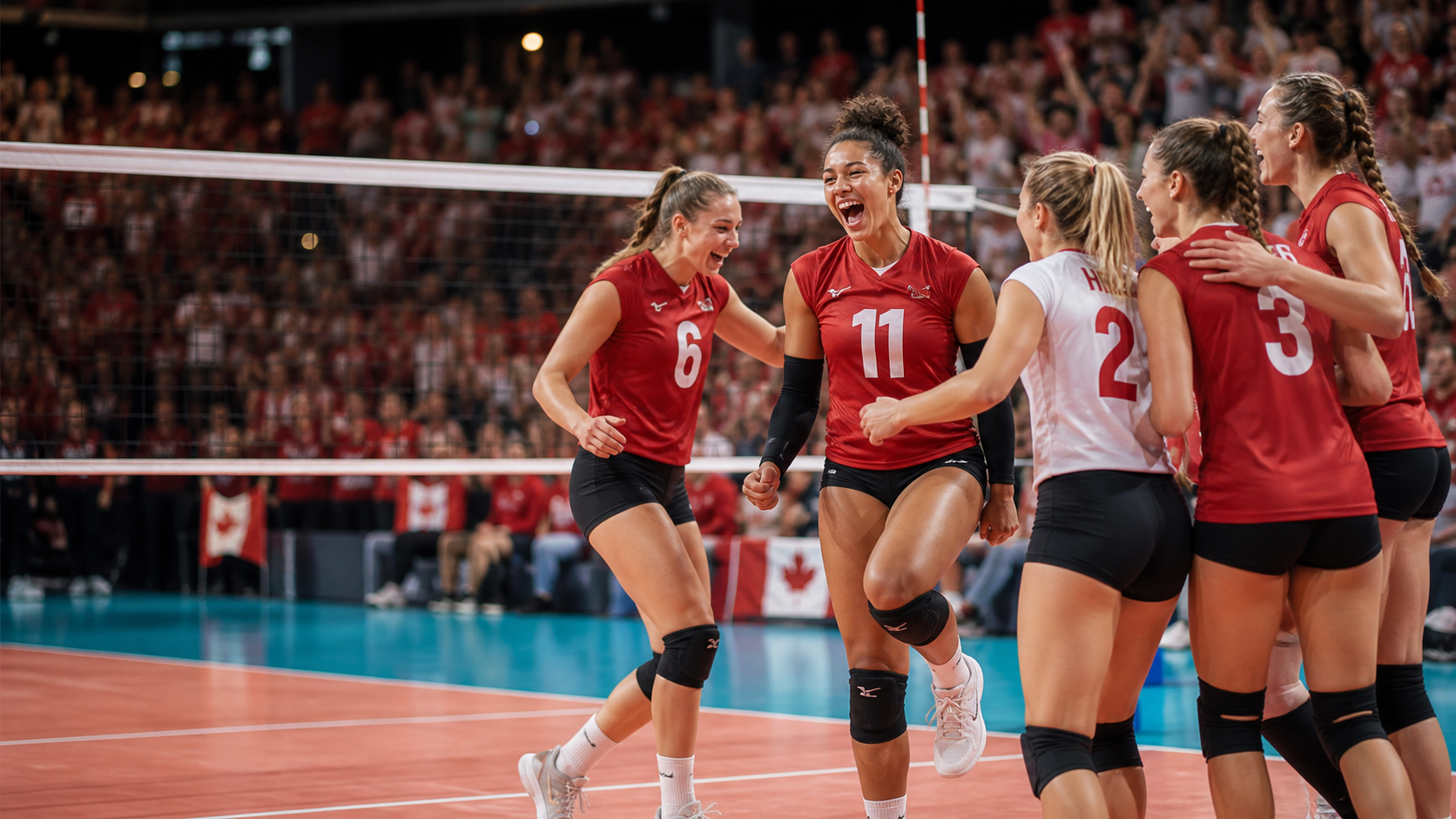
Canadian volleyball is becoming more exciting to follow, especially on the women's side. In 2026, Canada's women's national team reached the Volleyball Nations League Finals for the first time and finished sixth overall, the team's best-ever VNL result.
For young athletes across Canada, this is more than a sports headline. It is a reminder that Canadian volleyball is growing, and that players from this country can compete with some of the strongest teams in the world.
But the biggest lesson is not only about winning. It is about development, patience, confidence, teamwork, and learning how to keep improving one step at a time.
Progress Does Not Happen Overnight
When young players watch national team athletes, they often see the final result first: the powerful attacks, strong serves, big blocks, smart defence, and emotional wins.
What they do not always see is the long journey behind it.
National team players spend years building their skills. They make mistakes. They lose matches. They adjust. They train again. They learn from different coaches, different teammates, and different levels of competition.
That is an important message for young volleyball players: you do not need to be perfect right away. Growth takes time. The athletes who keep improving are usually the ones who stay coachable, keep showing up, and continue working even when progress feels slow.
Strong Fundamentals Still Matter
At the highest level, volleyball looks fast and powerful, but the game is still built on simple fundamentals.
Passing matters. Serving matters. Movement matters. Communication matters. Reading the play matters. Being in the right position before the ball arrives matters.
Young players sometimes want to jump straight into hitting harder or playing more advanced systems. Those things are exciting, but strong fundamentals are what allow athletes to play with confidence later.
Canada's national team success is a great reminder that strong volleyball starts with the basics. Players who learn how to move well, pass consistently, serve with purpose, and communicate clearly give themselves a much better chance to grow.
Confidence Comes From the Right Environment
One of the best things young athletes can learn from Canada's rise is that confidence is built over time.
Confidence does not mean never feeling nervous. It means learning how to compete even when the game is hard.
A good training environment helps players build that confidence. Athletes need coaches who teach, encourage, correct, and challenge them in a healthy way. They also need teammates who help create a positive culture.
When players feel supported, they are more willing to try, fail, learn, and try again. That is where real development happens.
Every Player Has a Role
On a strong volleyball team, not every athlete has the same role. Some players score points. Some defend. Some serve tough. Some bring energy. Some lead quietly. Some help the team stay calm when the pressure rises.
Young athletes need to understand that being valuable does not always mean being the loudest player or the player with the most kills.
A great teammate learns how to help the group. That might mean cheering from the bench, making a smart defensive play, communicating early, or bringing steady effort to every practice.
Canada's women's team shows that success comes from a full team, not just one player.
Setbacks Are Part of the Pathway
Every athlete faces disappointment at some point.
Maybe they do not make the team they wanted. Maybe they struggle at tryouts. Maybe they lose confidence. Maybe they compare themselves to other players who seem ahead.
That does not mean their volleyball journey is over.
In many cases, those moments become important turning points. Strong athletes learn how to respond when things do not go their way. They listen, adjust, and keep building.
Young players should see setbacks as information, not failure. A tough season, a missed team, or a difficult practice can still help an athlete grow if they use it the right way.
The Best Path Is Not Always the Fastest Path
Families often feel pressure to choose the most competitive option right away. But every athlete develops differently.
Some players are ready for a full club season. Some need more time to build skill, strength, confidence, and game understanding. Some love volleyball but do not want a heavy commitment yet.
That is completely okay.
At Vision Elite Academy, we believe the best development path is the one that fits the athlete's stage, goals, and confidence level. For players who want to keep improving without jumping into a full high-pressure club commitment, Vision Volleyball Club Tier 2 and developmental volleyball options can be a smart and healthy step forward.
These programs give athletes a chance to keep training, build stronger fundamentals, gain confidence, and stay connected to the game in a positive environment.
What Young Players Can Take From Team Canada
Canada's women's volleyball momentum gives young players something powerful to look up to.
It shows that Canadian athletes belong on the world stage. It shows that development matters. It shows that teamwork matters. It shows that players can keep growing even after challenges.
For young volleyball players, the message is simple: keep learning, keep training, be a good teammate, build strong habits, find the right environment, and remember that every great player started somewhere.
Final Thoughts
Canada women's volleyball is rising, and that is exciting for the next generation of athletes.
For parents, this is a great reminder that development should be about more than making a team. It should be about helping young athletes grow in confidence, skill, discipline, and love for the game.
Whether your child is just starting volleyball, preparing for club tryouts, or looking for a developmental pathway, the goal should be the same: help them enjoy the process, build strong foundations, and keep moving forward.